

July 17, 2025
|
in Criminal Law
in Tax Law
by Dr. Anthea Pitschel
Cryptocurrencies, Bitcoin, Criminal Law & Tax Law – A Brief Overview
- Accessing Seed Phrases: Not a classic case of theft, but relevant under criminal law
- Higher Regional Court (OLG) Decision (1 Ws 185/24): Investigative decision, not a verdict or acquittal
- Classification under Criminal Law: Conceivable offenses: Data espionage (§ 202a), data alteration (§ 303a), computer fraud (§ 263a)
- Tax Risks: Holding periods, staking, lending, incomplete disclosures or documentation
- Commercial Trading: Possible in cases of high frequency or professional structures
- Voluntary Disclosure: Only effective if complete, timely, and correct
- Our Law Firm: Advising and defending nationwide in crypto criminal and tax law – legally secure, discreet, experienced.
What the decision of Sept 18, 2024, really means and why Bitcoin and crypto investors should be particularly vigilant now
Decision by the OLG Braunschweig sparks discussion
On September 18, 2024 (Case No. 1 Ws 185/24), the OLG Braunschweig issued a decision within an ongoing investigation that is currently a topic of debate. The core issue was whether the assets of an IT employee could be seized after he allegedly gained unauthorized access to a seed phrase.
This was not a final judgment, but a procedural decision during the investigative stage. Nevertheless, the case raises fundamental questions regarding digital access data such as seed phrases and their relevance under criminal law.
We explain what the OLG’s decision is about and what the criminal and tax law consequences may be for Bitcoin and crypto investors.
The Case: Access to a Seed Phrase by an IT Employee
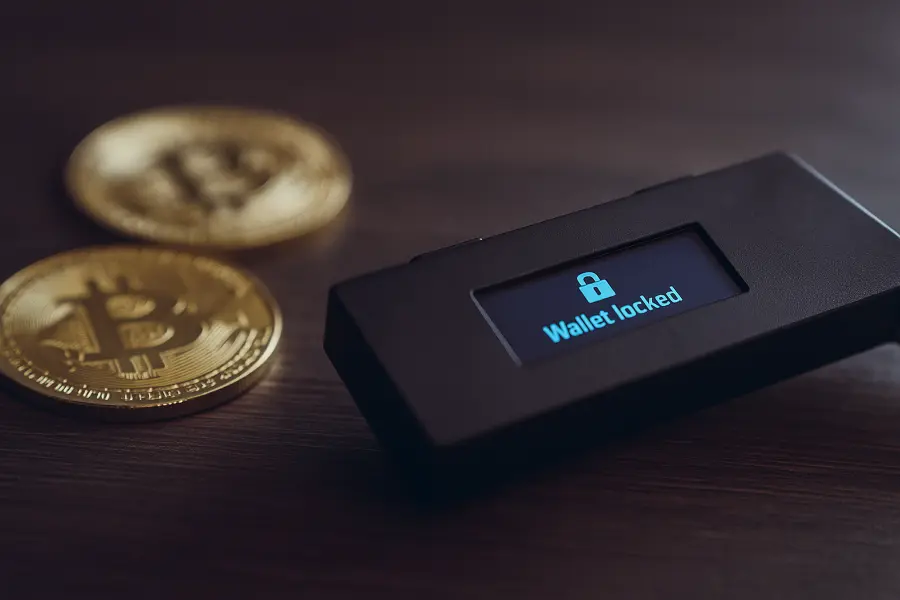
In the District Court district of Göttingen, an investigation is underway against a former IT employee who allegedly gained unauthorized access to the seed phrase of a wallet. The accused was reportedly commissioned to set up the crypto wallet for the person who later filed the complaint. Contrary to the agreement, he is then alleged to have transferred coins to two wallets not under the control of the witness. In doing so, he reportedly used the correct public and private keys – which the accused accessed by entering 24 security passwords that he had assigned during the creation of the wallet and kept in violation of the agreement.
By transferring the crypto assets, he allegedly removed them from the control and disposal of the complainant. The access data involved is said to represent significant crypto assets amounting to approximately 2.5 million euros.
The investigation is being conducted by the Göttingen Public Prosecutor’s Office on suspicion of data alteration pursuant to § 303a StGB, data espionage pursuant to § 202a StGB, and computer fraud pursuant to § 263a StGB.
The question of whether the IT employee’s behavior meets the requirements of a punishable act of theft under § 242 StGB is not the subject of the investigation.
The Public Prosecutor’s Office subsequently applied for an asset seizure to secure the funds. The Göttingen District Court ordered this. Upon appeal by the accused, the Göttingen Regional Court overturned the seizure, and the OLG Braunschweig has now confirmed the reversal:
No sufficient initial suspicion of a specific criminal offense.
In the opinion of the OLG, data alteration under § 303a StGB did not occur, as there was merely a violation of the interests of the person affected by the content of the data, which is why the requirements of the criminal offense were not met. Punishable injustice only exists if someone other than the perpetrator is affected by the act, thereby violating a third-party legal position.
While the logging of a transaction in the blockchain and the associated data-related change in the allocation of crypto assets involves a change in the allocation (and simultaneously a partial rendering unusable) of data, this is carried out by the network operators and thus not by the authorized parties themselves.
According to the OLG Braunschweig, an initial suspicion under § 202a StGB cannot be established because the accused accessed a third party’s wallet using the correct passwords, which were not obtained unlawfully but were already known to him. Therefore, the necessary requirement of overcoming a special access security measure was not met.
Furthermore, the commission of computer fraud under § 263a StGB must also be rejected in this specific case, as there is a lack of data usage equivalent to deception. In decentralized blockchain networks, initiating a transaction does not imply a declaration of actual authorization to do so.
What was not decided by the ruling?
- No final determination on the legality of the access
- No assessment of whether the behavior constitutes an act of theft
- No final criminal law assessment, as this is not a court decision concluding the proceedings
Core statement of the court:An asset seizure requires a specific initial suspicion. This was not present in this specific case.
Criminal Law Classification: Not Theft – But Other Offenses?
Why is there no investigation for theft?
Quite simply: Theft under § 242 StGB requires a movable, physical object. A seed phrase is digital information and therefore not a “thing” in the sense of criminal law. Therefore: No punishable act of theft.
However, other offenses could be met:
| Offense | Statute | Exemplary Application |
| Data Espionage | § 202a StGB | Accessing the seed phrase |
| Data Alteration | § 303a StGB | Altering wallet contents |
| Computer Fraud | § 263a StGB | Using the seed phrase for asset transfers |
These criminal offenses may be met in similar factual scenarios. In the case decided here, however, the OLG Braunschweig denied the requirements.
When could theft be assumed?
Theft in the sense of criminal law may exist if, for example:
- a hardware wallet is stolen
- a paper backup of the seed phrase is stolen
- someone physically accesses a device that allows wallet access
Tax Law Risks for Bitcoin & Co.
Bitcoin and other cryptocurrencies carry not only technical but also tax law risks. Many investors make similar mistakes:
Common Mistakes:
- Selling coins within the speculation period (1 year)
- Staking or lending income is not taxed
- Missing or incomplete transaction documentation
- Incomplete information in the tax return
Consequence:
Investigations for tax evasion pursuant to § 370 AO
Criminal risks beyond tax law
Criminal investigations can also loom outside of tax law, e.g., due to:
- Suspicion of money laundering
- Breach of trust, for example, regarding third-party wallet access
- Use of anonymous mixers or unregulated decentralized platforms
Our law firm specializes in criminal defense in the crypto sector.
Voluntary Disclosure: The Last Chance for Immunity
If you have not taxed your profits or have done so incompletely, a voluntary disclosure may be the right path – but only under the following conditions:
- It is complete
- It is timely (before discovery by authorities)
- All relevant wallets, transactions, and profits are traceable
Only under these conditions can a voluntary disclosure result in immunity from prosecution.
Our Services for You
As a law firm specializing in white-collar criminal law, we advise and defend clients throughout Germany in the field of digital assets:
- Legal assessment of wallets, coins & transactions
- Tax structuring for hodlers & entrepreneurs
- Defense in investigations – from tax evasion to computer fraud
- Preparation of voluntary disclosures
- Review of international matters & crypto access
FAQ: Bitcoin, Cryptocurrencies, Tax Law & Criminal Liability
Was accessing a seed phrase legal in Lower Saxony?
This was not conclusively decided. The OLG merely determined that an asset seizure could not be issued – not that the behavior was lawful.
Can a seed phrase be stolen?
Only if it exists physically (e.g., on paper). Digitally: potentially punishable under other regulations.
Are Bitcoin profits tax-free?
Yes, after a one-year holding period. Exceptions exist for staking or commercial use, among others.
How does the tax office find out about my wallets?
Through crypto exchanges, EU control notifications, and blockchain analysis tools.
When is a voluntary disclosure worth it?
If you have provided no or incorrect information for a long period. Timing is crucial.
How are crypto transactions documented?
Every transaction should be saved with a timestamp, wallet address, counterparty (if known), and Euro value at the time of the transaction. Professional crypto tax tools help maintain an overview.
What happens if I conceal my wallet?
This can be considered tax evasion. Tax offices are increasingly accessing data from exchanges, banks, and international registry reports.
Can regular trading with Bitcoin be considered commercial?
Can regular trading with Bitcoin be considered commercial?
Consultation via Video Conference
Our attorneys provide personal consultations regardless of your location – via secure video conferencing, throughout Germany.
Schedule an Appointment
Ihr Kontakt zu uns
Schildern Sie uns Ihren Fall vertraulich
Schildern Sie kurz, was passiert ist und ob Fristen oder Termine laufen. Wir melden uns in der Regel innerhalb von 24 Stunden, um das weitere Vorgehen und die benötigten Unterlagen zu klären.
Call directly